Positioning and content architecture
Define what makes the collection distinct, organize the questions guests ask, and create a page structure that can grow without becoming confusing.
VACATION RENTAL WEBSITE DESIGN
Custom websites for vacation rental agencies, independent villas, cabins, boutique stays, and property collections—designed around the character of the place and the practical path to booking it.
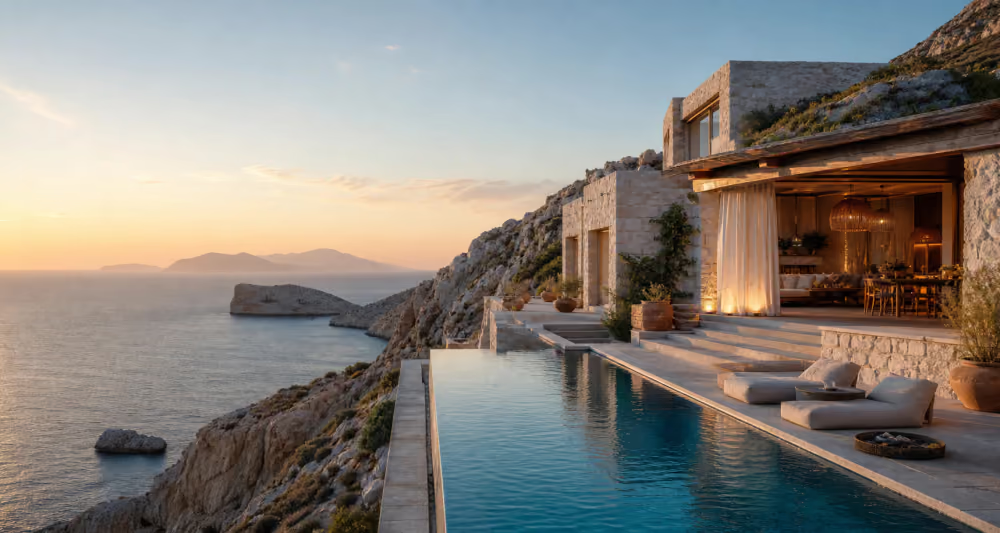
A DIGITAL HOME FOR THE STAY
A vacation rental website has two jobs at once: carry the feeling of the place and help a guest make a confident decision.
That means more than a large photograph and a booking button. Guests need to understand where a property is, who it suits, what the total stay may cost, which dates are open, and what will happen after they reserve. An agency also needs content that is manageable, search that works across its collection, and technology that connects with the systems its team already relies on.
Elsewhere brings those needs into one considered experience. The strategy begins with the property collection, the audience, and the booking operation. The design grows from the landscape and the brand rather than a hospitality template. The build then supports fast mobile pages, accessible navigation, useful destination content, and a direct path from discovery to a secure reservation.
WHAT THE WORK CAN INCLUDE
The exact scope follows the business. A single villa may need a focused story; a large agency may need property search, maps, multilingual content, and many carefully structured templates.
Define what makes the collection distinct, organize the questions guests ask, and create a page structure that can grow without becoming confusing.
Help guests compare the right stays through thoughtful filters, maps, flexible dates, clear amenities, galleries, policies, reviews, and local context.
Connect live rates, availability, payments, agreements, and confirmations through the booking platform or API that fits the operation.
Build art direction, typography, color, motion, and image behavior around the actual experience instead of making every property look interchangeable.
Create useful property, location, and experience pages with clear internal paths, structured metadata, crawlable content, and a technically sound foundation.
Test across phones, browsers, booking scenarios, and content states, then launch with documented ownership and an option for continued care.
Menus, galleries, filters, date selection, pricing, and checkout are designed for small screens from the beginning. Images are sized for the device, so atmosphere does not have to come at the expense of speed.
Capacity, sleeping arrangements, accessibility, house rules, location context, fees, and cancellation terms should be easy to understand. Clarity reduces hesitation and helps the right guest choose the right property.
A content model can support a single signature stay, a group of villas, or a regional inventory with shared amenities and destination guides. Templates remain consistent while each property keeps its own voice.
Guesty, Hostaway, Lodgify, OwnerRez, and other systems can often connect through an embedded booking engine, channel-aware link, or API. Integration decisions are mapped before the interface is designed.
A complete rebuild is not always the right answer. If the brand, content, or platform still serves the business, the work can focus on the areas that cause friction: mobile usability, speed, search visibility, confusing navigation, or a disconnected booking path.
See the vacation rental website redesign approachShare the properties, the current systems, and what you want guests to feel. The next step is a focused conversation about the right scope.
Plan a vacation rental website